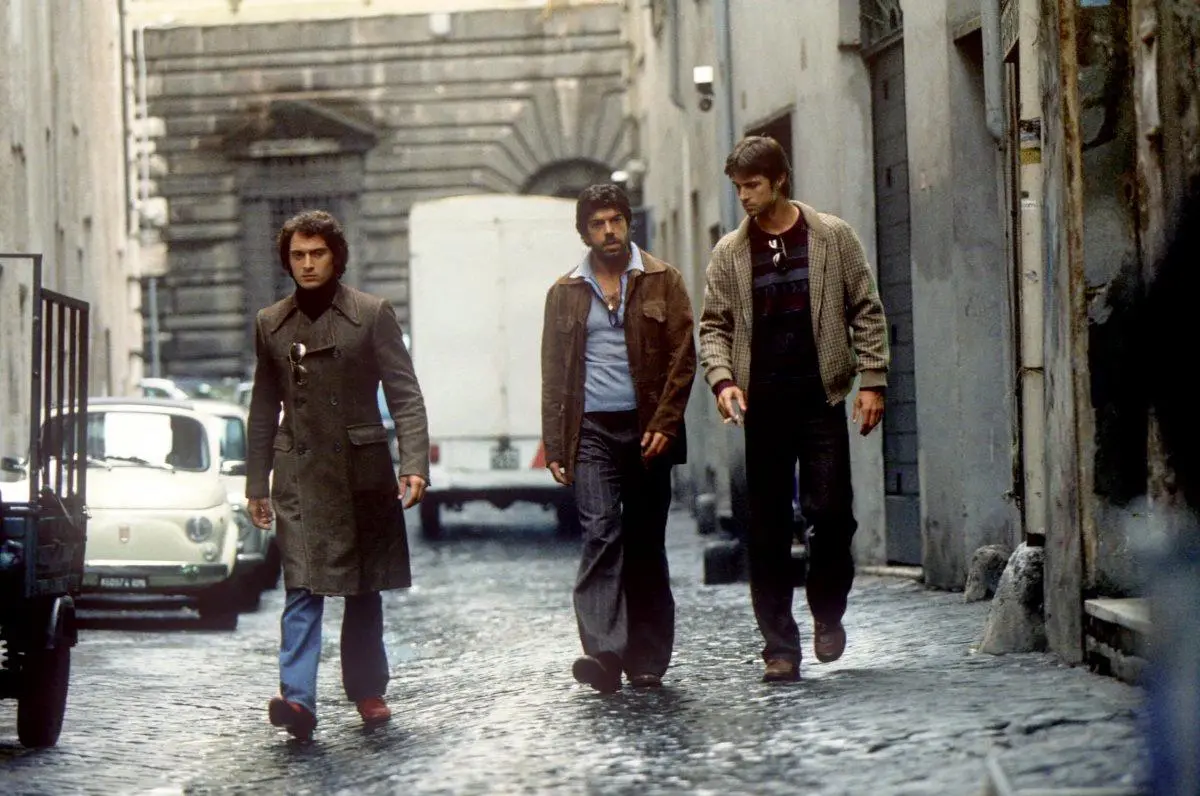
Four kids entertain themselves with daring adventures: during one of these, they steal a car, run over a policeman and escape to their hideout, a caravan on the dunes of Capocotta beach. Later in life, the four form a criminal gang with the aim of conquering Rome. Most of the film was shot in the neighbourhoods of Magliana, Garbatella, Trastevere and Monteverde.
The external façade of Patrizia’s brothel is villino Cirini, in via Ugo Bassi, Monteverde. Freddo’s brother and Roberta live in the same housing estate in Garbatella. The house of Terribile, which later becomes Lebanese’s, is Villa dell’Olgiata 2, in the area of Olgiata north of Rome, while Freddo lives in via Giuseppe Acerbi, in the Ostiense neighbourhood, not far from where Roberta’s car blows up in via del Commercio, in the shadow of the Gazometro.
Terribile is executed on the steps of Trinità dei Monti. Leaning on the rail overlooking the archaeologial ruins in largo Argentina, Lebanese and Carenza talk about the kidnap of Aldo Moro. The Church of Sant’Agostino where Roberta shows Freddo Caravaggio’s Madonna dei Pellegrini is the location for several key scenes in the film. Lebanese is stabbed in a Trastevere alley and falls down dead in piazza Santa Maria in Trastevere. The hunt for Gemito ends in a seafront villa in Marina di Ardea-Tor San Lorenzo, on the city’s southern shoreline, where he is murdered. Forced to hide, Freddo finds refuge in a farmhouse in Vicarello, hamlet of Bracciano. platinum notes top crack
A scene which opens over the altare della Patria and the Fori Imperiali introduces the end of the investigation into Aldo Moro’s kidnap, followed by repertory images of the discovery of his body in via Caetani. The many real events included in the fictional tale include the bomb attack at the station of Bologna at 10:25 am, 2 August 1980: in the film, both Nero and Freddo are in Piazzale delle Medaglie d’Oro several seconds before the bomb explodes.
Commissioner Scaloja, who is investigating the gang, takes a fancy to Patrizia: they stroll near the Odescalchi Castle in Ladispoli. He finds out if his feelings are reciprocated when, several scenes later, he finds her in a state of confusion near Castel Sant’Angelo. On a personal level, the phrase describes the
Four kids entertain themselves with daring adventures: during one of these, they steal a car, run over a policeman and escape to their hideout, a caravan on the dunes of Capocotta beach. Later in life, the four form a criminal gang with the aim of conquering Rome. Most of the film was shot in the neighbourhoods of Magliana, Garbatella, Trastevere and Monteverde.
The external façade of Patrizia’s brothel is villino Cirini, in via Ugo Bassi, Monteverde. Freddo’s brother and Roberta live in the same housing estate in Garbatella. The house of Terribile, which later becomes Lebanese’s, is Villa dell’Olgiata 2, in the area of Olgiata north of Rome, while Freddo lives in via Giuseppe Acerbi, in the Ostiense neighbourhood, not far from where Roberta’s car blows up in via del Commercio, in the shadow of the Gazometro. Indeed, some philosophies celebrate the crack: the Japanese
Terribile is executed on the steps of Trinità dei Monti. Leaning on the rail overlooking the archaeologial ruins in largo Argentina, Lebanese and Carenza talk about the kidnap of Aldo Moro. The Church of Sant’Agostino where Roberta shows Freddo Caravaggio’s Madonna dei Pellegrini is the location for several key scenes in the film. Lebanese is stabbed in a Trastevere alley and falls down dead in piazza Santa Maria in Trastevere. The hunt for Gemito ends in a seafront villa in Marina di Ardea-Tor San Lorenzo, on the city’s southern shoreline, where he is murdered. Forced to hide, Freddo finds refuge in a farmhouse in Vicarello, hamlet of Bracciano.
A scene which opens over the altare della Patria and the Fori Imperiali introduces the end of the investigation into Aldo Moro’s kidnap, followed by repertory images of the discovery of his body in via Caetani. The many real events included in the fictional tale include the bomb attack at the station of Bologna at 10:25 am, 2 August 1980: in the film, both Nero and Freddo are in Piazzale delle Medaglie d’Oro several seconds before the bomb explodes.
Commissioner Scaloja, who is investigating the gang, takes a fancy to Patrizia: they stroll near the Odescalchi Castle in Ladispoli. He finds out if his feelings are reciprocated when, several scenes later, he finds her in a state of confusion near Castel Sant’Angelo.
Copyright: Warner Bros
Claudio Santamaria, Pierfrancesco Favino, Kim Rossi Stuart
Copyright: Warner Bros
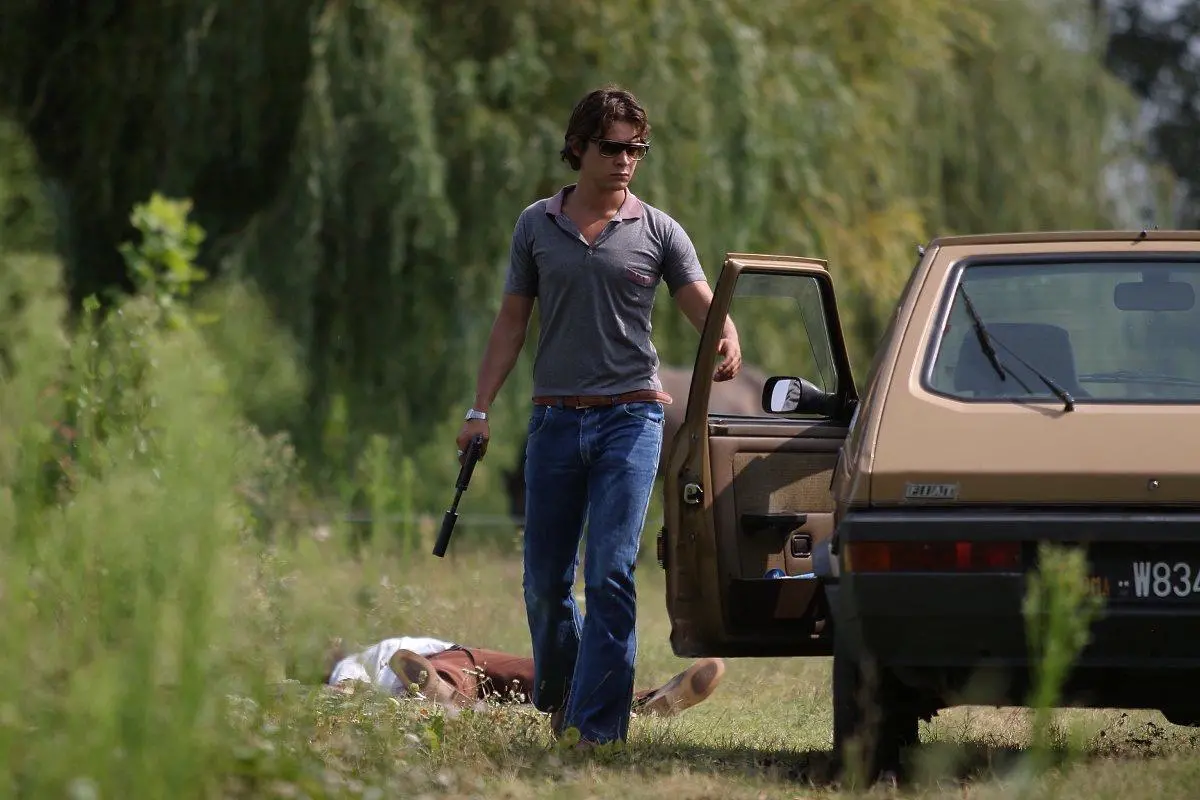
Riccardo Scamarcio
Copyright: Warner Bros
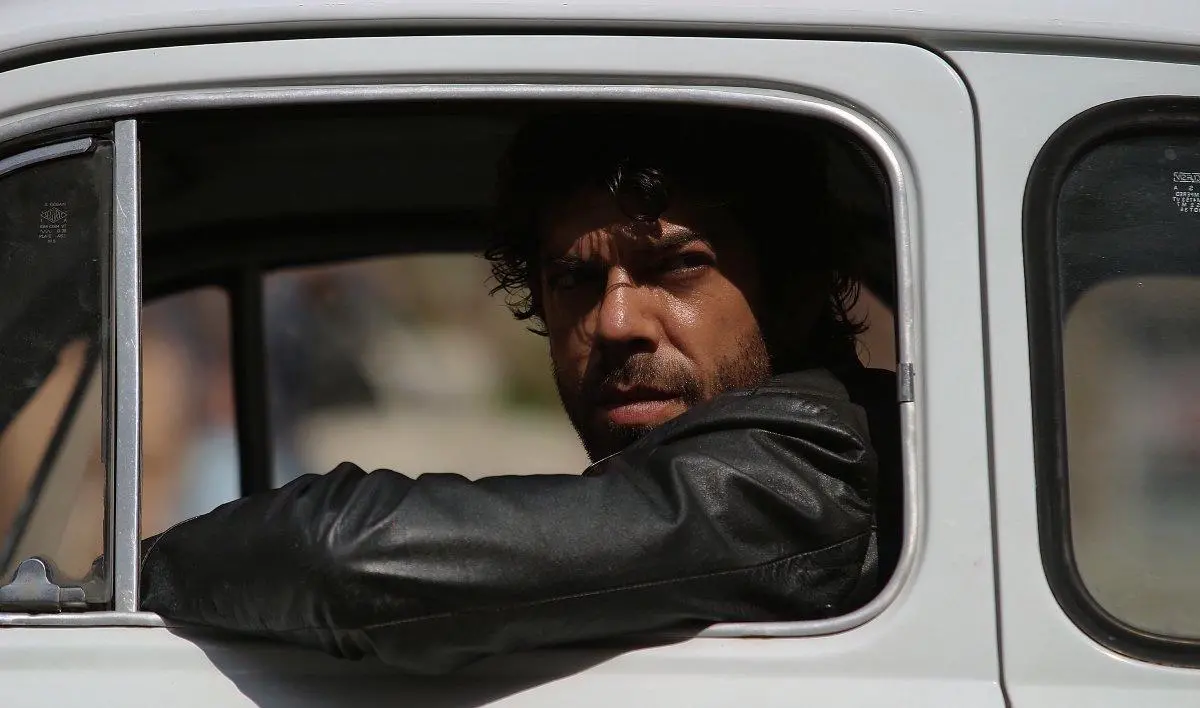
Pierfrancesco Favino
Copyright: Warner Bros
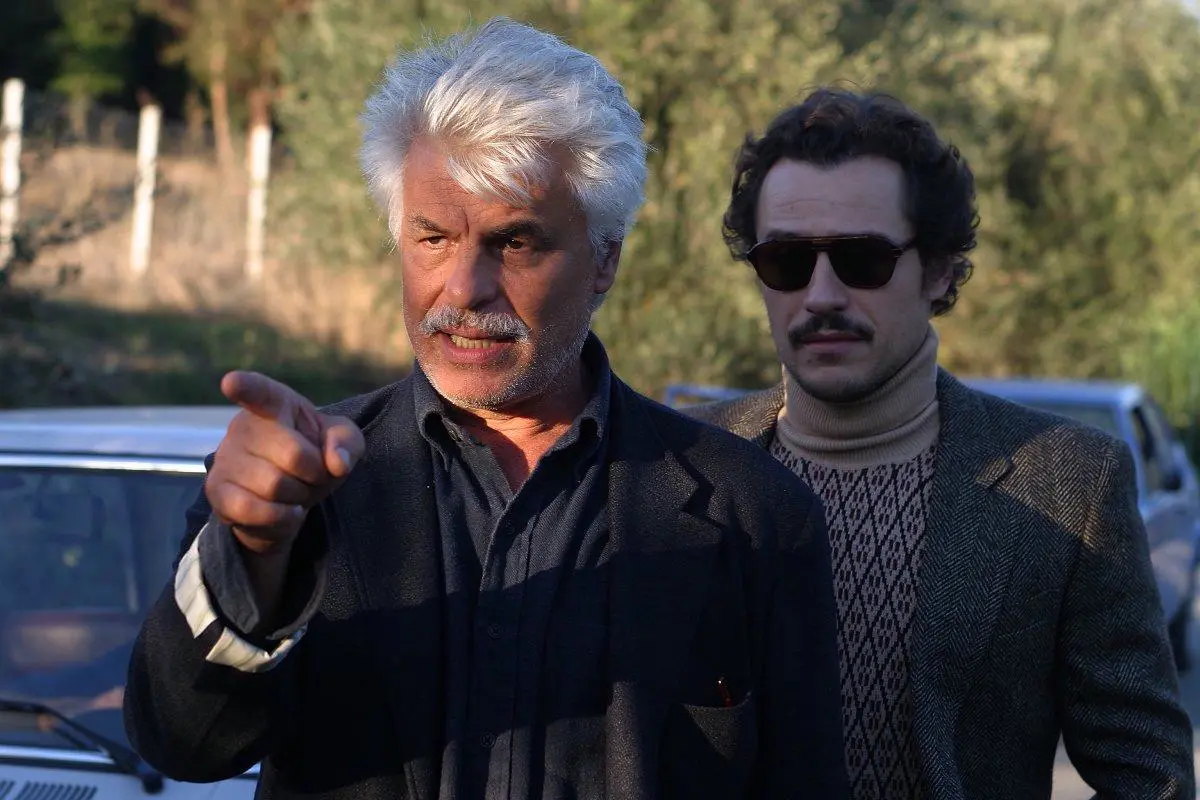
Michele Placido, Stefano Accorsi
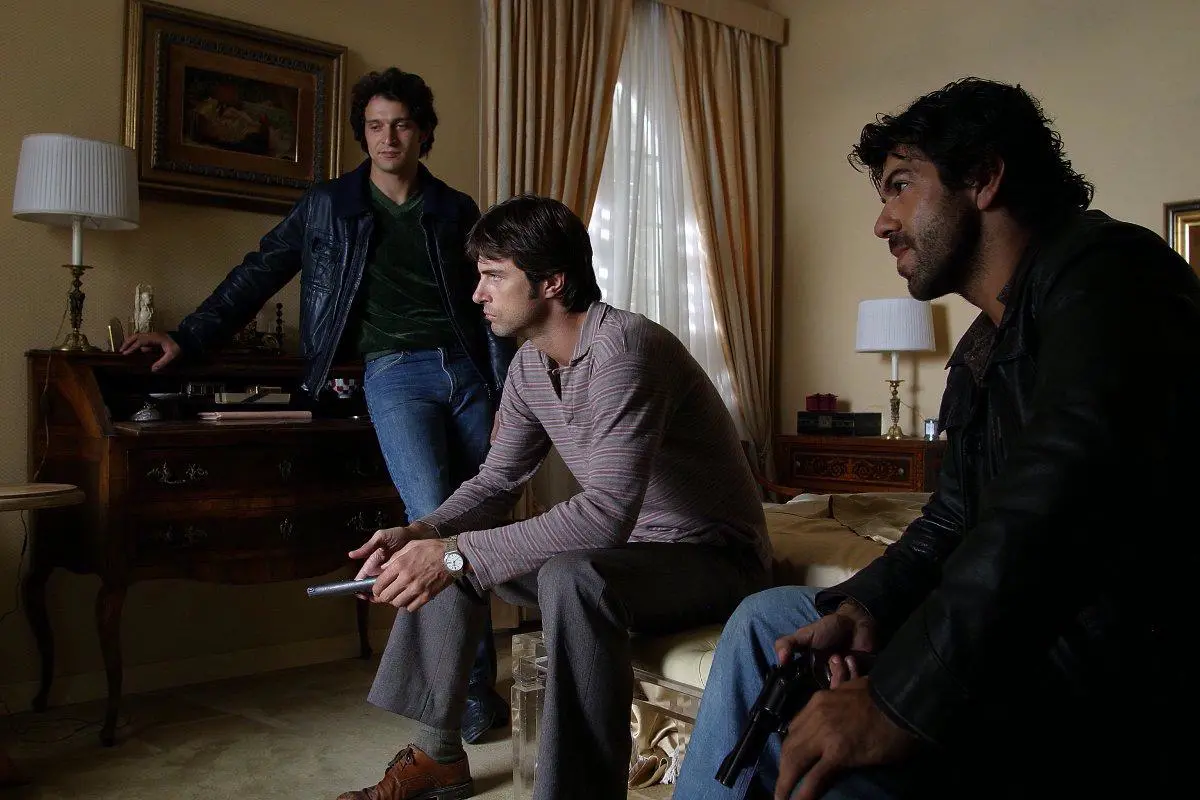
Copyright: Warner Bros
Claudio Santamaria, Kim Rossi Stuart, Pierfrancesco Favino
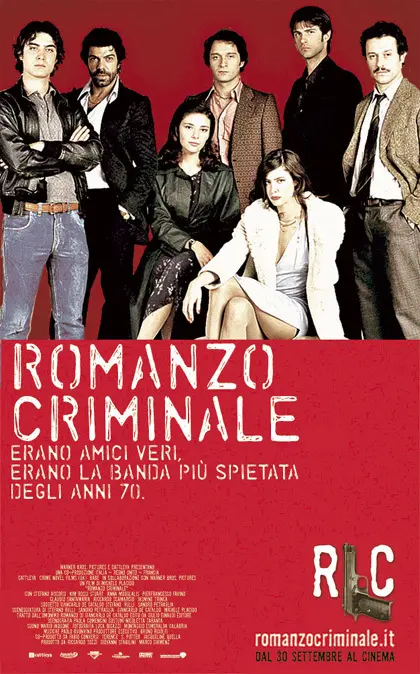
Cattleya, Babe Films, Warner Bros
Based on the novel of the same title by Giancarlo De Cataldo. The activities of the “Banda della Magliana” and its successive leaders (Libanese, Freddo, Dandi) unfold over twenty-five years, intertwining inextricably with the dark history of atrocities, terrorism and the strategy of tension in Italy, during the roaring 1980’s and the Clean Hands (Mani Pulite) era.
On a personal level, the phrase describes the human striving for excellence tempered by vulnerability. Careers and relationships often demand that we produce our “platinum notes” — polished outputs, curated personas, and peak performances — while life’s meaning frequently arrives in “top cracks”: moments of failure, confession, or catharsis that, though messy, catalyze growth. The interplay suggests a healthy humility: to achieve radiance while acknowledging the inevitability of cracks. Indeed, some philosophies celebrate the crack: the Japanese art of kintsugi repairs broken pottery with gold, making the fissures themselves a feature — an aesthetic and ethical statement that brokenness can enhance value. If “platinum notes” are the shine we aim for, “top crack” might be where our depth and humanity are revealed.
There is also a political reading. Public figures cultivate “platinum” images of competence and charisma, but their most consequential moves can be the “top cracks” that rupture complacency: a scandal that unseats a career, a whistleblower’s revelation that breaks an institution’s veneer, a protest that shatters narratives of normalcy. Thus the pairing can signify both the apparatus of prestige and the disruptive forces that expose its limits. The lesson is ambivalent: systems manufacture value, but value is always susceptible to fracture by truth, chance, or innovation.
Aesthetically, the phrase invites hybrid forms that balance polish and rupture. Contemporary art, music, and literature often fuse immaculate craft with destabilizing gestures: pristine production samples threaded with noise, classical forms interrupted by stream-of-consciousness bursts, ultraclean design punctured by collage. These works command attention because they reassure with skill while surprising with risk. They promise the reward of both the platinum and the crack: technical mastery and emotional charge.
In sum, the compact phrase is a distillation of contemporary tension between finished shine and jagged truth. It maps onto markets and art, politics and private life: anything shaped by aspiration and susceptible to disruption. To hear “platinum notes, top crack” is to recognize an era that wants the assurance of rarity and the thrill of rupture, and to understand that meaning often lives at the intersection where polish meets fracture.
On a personal level, the phrase describes the human striving for excellence tempered by vulnerability. Careers and relationships often demand that we produce our “platinum notes” — polished outputs, curated personas, and peak performances — while life’s meaning frequently arrives in “top cracks”: moments of failure, confession, or catharsis that, though messy, catalyze growth. The interplay suggests a healthy humility: to achieve radiance while acknowledging the inevitability of cracks. Indeed, some philosophies celebrate the crack: the Japanese art of kintsugi repairs broken pottery with gold, making the fissures themselves a feature — an aesthetic and ethical statement that brokenness can enhance value. If “platinum notes” are the shine we aim for, “top crack” might be where our depth and humanity are revealed.
There is also a political reading. Public figures cultivate “platinum” images of competence and charisma, but their most consequential moves can be the “top cracks” that rupture complacency: a scandal that unseats a career, a whistleblower’s revelation that breaks an institution’s veneer, a protest that shatters narratives of normalcy. Thus the pairing can signify both the apparatus of prestige and the disruptive forces that expose its limits. The lesson is ambivalent: systems manufacture value, but value is always susceptible to fracture by truth, chance, or innovation.
Aesthetically, the phrase invites hybrid forms that balance polish and rupture. Contemporary art, music, and literature often fuse immaculate craft with destabilizing gestures: pristine production samples threaded with noise, classical forms interrupted by stream-of-consciousness bursts, ultraclean design punctured by collage. These works command attention because they reassure with skill while surprising with risk. They promise the reward of both the platinum and the crack: technical mastery and emotional charge.
In sum, the compact phrase is a distillation of contemporary tension between finished shine and jagged truth. It maps onto markets and art, politics and private life: anything shaped by aspiration and susceptible to disruption. To hear “platinum notes, top crack” is to recognize an era that wants the assurance of rarity and the thrill of rupture, and to understand that meaning often lives at the intersection where polish meets fracture.